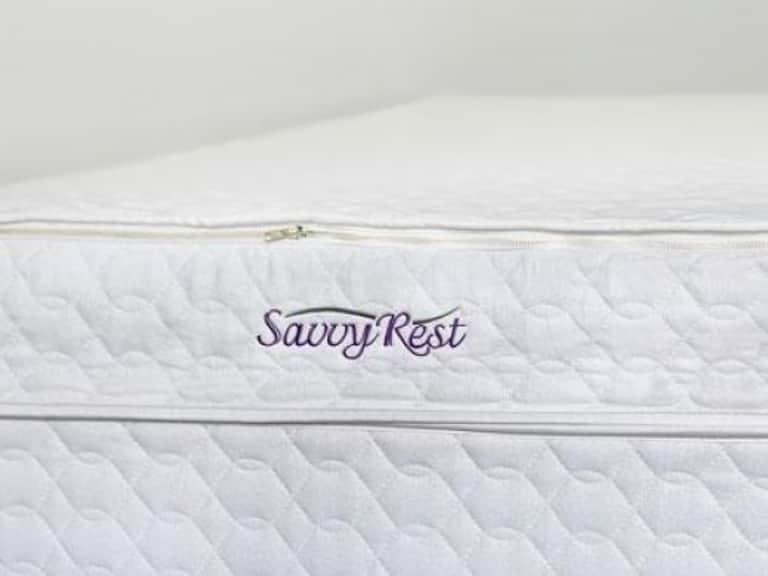
Mattress flexibility and adjustable-bed compatibility
Can an Obasan Mattress Flex with an Adjustable Base?
An adjustable base changes the shape of the sleep surface, lifting the head, feet, or both. Whether an Obasan mattress can move comfortably with that motion depends on its exact construction, the foundation’s design, and the manufacturer’s current guidance. Here’s what to check before pairing the two—and how to make a careful decision without relying on assumptions.
The appeal of an adjustable bed is easy to understand: a small change in elevation can make reading, resting, or getting settled feel more comfortable. But adding movement beneath a mattress changes the equation. A mattress that performs well on a flat foundation may respond differently when asked to bend repeatedly around moving sections.
That distinction matters when considering an organic mattress, including one from Obasan. Natural materials and layered construction may offer particular comfort qualities, but an “organic” label alone does not tell you whether a mattress is suitable for an adjustable base. Nor does a mattress’s apparent softness or flexibility provide a definitive answer. Compatibility must be checked for the specific model and the specific base.
The most reliable first step is to seek current, model-specific guidance from Obasan. Confirm the answer in writing if possible, and ask the base manufacturer to verify that its unit can support the mattress. The goal is not simply to see whether the mattress bends once. It is to make sure the pairing is permitted, supported, and appropriate for regular use.
Why mattress flexibility matters
An adjustable foundation articulates: its deck moves at one or more joints to elevate parts of the bed. When the head section rises, the mattress follows the contour created by the base. When the foot section rises, the lower portion bends as well. Some bases also offer a preset “zero-gravity” position, lumbar adjustment, or other movement patterns.
For the mattress to follow this movement, its materials and construction need to tolerate bending without becoming strained or shifting out of place. A mattress that is too rigid, too thick for a particular base, or built with components that do not move as intended may not track the frame smoothly. The result could be discomfort, bunching, gaps, uneven support, or increased wear. These are possibilities to investigate, not predictions about any one Obasan model.
Flexibility is only one part of the picture. A mattress may bend readily but still be unsuitable if the foundation does not support its weight, if its dimensions do not match the base, or if the manufacturer excludes adjustable foundations from the warranty. Conversely, some mattresses are designed to work with compatible adjustable bases, provided the foundation’s movement and support meet the specified requirements.
It helps to separate three questions: Can the mattress flex? Is this particular base suitable for it? And does using them together preserve the applicable warranty coverage? A satisfactory answer to all three is more useful than a general claim that a mattress is “adjustable-bed friendly.”
What to verify for an Obasan mattress
Obasan offers mattresses in different configurations, and product details or recommendations can change over time. Avoid assuming that one model’s guidance applies to another. Before ordering or setting up an adjustable foundation, identify the exact mattress model, size, and construction you have—or plan to buy—and ask Obasan about that specific combination.
- Model-specific compatibility: Ask whether the exact Obasan mattress is approved for use with an adjustable base. If there are conditions, request them clearly.
- Permitted base types: Find out whether the recommendation applies to a particular style of adjustable foundation or to any base meeting stated requirements.
- Movement limits: Ask whether there are restrictions on head or foot elevation, preset positions, or repeated articulation.
- Support requirements: Confirm what type of platform, deck, or support surface the mattress needs while flat and while articulated.
- Thickness and configuration: Check whether the mattress’s height, layer arrangement, or any optional components affect compatibility.
- Warranty terms: Ask whether adjustable-base use is covered and whether the warranty requires a particular base or setup.
- Care and handling: Confirm how to position, move, and maintain the mattress without putting undue stress on its materials or cover.
Try to get guidance from a source responsible for the mattress—such as the manufacturer or an authorized retailer able to verify current instructions. A general statement from a friend, online discussion, or base salesperson may be helpful context, but it cannot replace the mattress maker’s terms. Keep product documentation, purchase records, and any written compatibility advice together.
If you are asking by phone, take notes that include the date, the model name, the person or department you contacted, and the substance of the answer. Better still, follow up by email so you have a clear record. This is particularly valuable if warranty coverage depends on following specific instructions.
The base matters just as much
Adjustable foundations differ in construction and movement. Some have separate head and foot sections; others move through a wider range of positions. Their platforms, joints, frames, and weight limits may also vary. Compatibility is therefore a relationship between two pieces of equipment—not a feature that belongs to the mattress alone.
Ask the base manufacturer whether the foundation is suitable for the mattress’s size, weight, and construction. Confirm the required support surface and whether the base has any restrictions on mattress thickness or type. If you share the bed, account for the combined weight of the mattress and sleepers as well as any bedding or accessories, following the base maker’s stated capacity.
Check that the mattress will be supported across the base in the positions you expect to use. The deck should not leave unsupported areas that conflict with either manufacturer’s instructions. A frame that fits the room and appears sturdy is not necessarily a suitable foundation for a particular mattress. Details such as the locations of support bars, the movement hinge, and the deck’s surface can make a practical difference.
Also consider how the mattress is secured. Adjustable bases may use retainers or other features to limit sliding, but the approved setup depends on the equipment. Do not add straps, wedges, rigid panels, or other modifications unless both manufacturers confirm they are acceptable. Improvised changes can interfere with movement or support and may affect warranty terms.
How materials and construction influence movement
Mattresses are not all built to respond to articulation in the same way. Foam, latex, springs, quilting, covers, and layered combinations each contribute to how a mattress bends, returns to shape, and distributes pressure. Yet material labels alone are not enough to determine compatibility. Two mattresses made with the same broad material can differ in thickness, firmness, internal assembly, and intended use.
Layered mattresses deserve particular attention because their components need to remain stable as the mattress changes shape. The cover may hold the layers in place, and the layers themselves may have different degrees of resilience. A design that feels flexible by hand is not automatically tested or approved for repeated movement on an adjustable foundation. Only the manufacturer can clarify what the finished product is intended to do.
Thickness can also affect how a mattress moves. A taller profile may have a different bending behavior from a thinner one, but there is no universal thickness cutoff that establishes compatibility. The base’s geometry and the mattress’s construction both matter. Ask about the exact combination rather than relying on a rule of thumb.
Natural or organic materials do not eliminate these practical considerations. Certifications may describe sourcing, material content, or manufacturing standards; they do not by themselves certify adjustable-base performance. For an informed decision, keep material questions and mechanical compatibility questions distinct.
A practical compatibility checklist
Before bringing an Obasan mattress and adjustable foundation together, work through a short checklist. It can help you catch an unanswered question before setup, when returning or changing equipment may be more complicated.
- Write down the exact model and size. Include any configuration or optional layer details that distinguish your mattress from other models.
- Consult Obasan’s current instructions. Look for explicit adjustable-base guidance in the product documentation or contact the manufacturer directly.
- Ask about the base you own or are considering. Provide its make, model, dimensions, and relevant technical specifications.
- Confirm support and capacity. Check the foundation’s requirements for deck support, mattress size, and total load.
- Clarify warranty implications. Ask whether the proposed setup is permitted and what evidence of correct support may be needed.
- Save the answers. Keep written confirmations and manuals with your purchase records.
- Set up according to instructions. Follow both manufacturers’ directions, and do not test extreme positions before checking the permitted range.
If either manufacturer cannot confirm compatibility, treat the answer as unresolved rather than as approval. You can ask what additional specifications or documentation they need to make a determination. A careful pause is preferable to discovering after months of use that the mattress was outside its recommended setup.
What to observe during setup
Once you have confirmed that the combination is permitted, assemble and position the foundation exactly as directed. Make sure the mattress is centered, its corners are aligned, and any manufacturer-specified retainers are used correctly. Check that sheets, blankets, and mattress protectors are not caught in moving parts or pulled so tightly that they restrict articulation.
Begin with a modest adjustment rather than moving immediately through every available position. Observe whether the mattress follows the base evenly and whether the surface remains properly aligned. Listen for unusual sounds, but remember that a sound by itself does not identify the source or prove a problem. If you see persistent bunching, separation, sliding, or an unexpected gap, return the base to its flat position and consult the manufacturers before continuing to use that setting.
Do not force the mattress to bend by hand, stand or kneel on an elevated section, or use a position outside the instructions in an effort to “break it in.” Adjustable equipment has moving joints and weight limits. Safe use means allowing the base to do the movement it was designed to perform, within its approved range.
After a few nights, check that the bedding and mattress remain in place and that the setup still feels comfortable. This is a practical observation, not a substitute for manufacturer approval or a mechanical inspection. If anything seems unusual, stop using the position in question and seek advice.
Comfort is personal, but compatibility is specific
An adjustable base can change the way a mattress feels, even when the pairing is approved. Raising the head or feet redistributes contact and pressure, and the sensation may differ from lying flat. Your pillow height, sleep position, mattress firmness, and bedding can contribute to the experience too. It can be useful to make small adjustments and give yourself time to notice whether a position is comfortable, rather than assuming a particular setting will suit everyone.
That personal response should not be confused with a mattress’s mechanical suitability. A position can feel pleasant while still being outside the manufacturer’s instructions; an approved setup can also feel unfamiliar at first. Keep the questions separate: first establish that the mattress and base are appropriate together, then explore comfort within the permitted range.
Pillows and bedding can play a supporting role. A pillow with adjustable fill may help you fine-tune head and neck support as your upper body is elevated. For example, the Savvy Rest Organic Kapok Pillow has removable fill, allowing the sleeper to adjust its loft and firmness. That kind of adjustability is about personal comfort; it does not establish whether an Obasan mattress is compatible with a particular base.
A useful point of comparison: adjustable-base guidance
When looking at mattress information, notice how clearly it addresses adjustable foundations. For instance, the product information for the Savvy Rest Tranquility Latex Mattress specifically states that the mattress may be used on an adjustable bed base. That statement is relevant to that mattress and should not be generalized to Obasan or to another model, even if the products share broad material characteristics.
This is the kind of detail to look for: direct language tied to a named mattress, together with any conditions about support, movement, or warranty. If a product page is silent, silence is not necessarily a prohibition—but it is not confirmation either. Ask for current, model-specific guidance before committing to a setup.
Questions worth asking before you decide
A concise, specific question tends to get a more useful answer than “Will this work?” Consider asking:
- Is this exact Obasan mattress model approved for use with an adjustable base?
- Are there limits on mattress height, base style, head lift, foot lift, or other positions?
- Does the mattress need a particular type of platform or continuous support?
- Are there setup requirements for retaining the mattress or preventing it from shifting?
- Will use on the base affect the mattress warranty, and what documentation should I keep?
- Should I check any specific measurements or specifications with the adjustable-base manufacturer?
Share the base’s exact model number, not only its brand name. Manufacturers may sell different foundations under similar names, and their movement range or support design may not be identical. If you have already purchased the mattress, include its label or order details so the answer refers to the correct configuration.
The bottom line
Can an Obasan mattress flex with an adjustable base? The answer depends on the specific mattress and foundation—not simply on the fact that the mattress is organic, layered, or feels pliable. Mattress flexibility, construction, thickness, base movement, support requirements, and warranty terms all deserve attention.
Before pairing them, confirm current compatibility guidance directly with Obasan and the adjustable-base manufacturer. Get any relevant conditions in writing, follow the approved setup, and use the base only within the stated limits. If you cannot verify that the combination is supported, do not assume that a successful one-time bend means it is suitable for everyday use.
That small amount of homework can help protect the mattress, the foundation, and your expectations. Most importantly, it lets you make a choice based on the actual equipment in your bedroom—not a general promise that every mattress can adjust.
Frequently asked questions
Does an organic mattress automatically work with an adjustable base?
No. Organic describes aspects of materials or sourcing, not necessarily the mattress’s ability to articulate. Check the exact model’s compatibility instructions and warranty terms.
Can I tell by pressing or bending the mattress?
Not reliably. A brief hand test does not show how a mattress will respond to repeated movement on a particular foundation. Use manufacturer guidance rather than an informal flexibility test.
Can an adjustable base affect a mattress warranty?
It may, depending on the warranty’s terms and the support used. Ask the mattress maker whether the proposed base and setup are permitted, and keep its answer with your records.
What if the product information does not mention adjustable beds?
Contact the manufacturer with the exact model and ask for a clear answer. Do not treat missing information as either approval or a definite restriction until you have checked.